An increase in agroforestry is essential to meet nature and climate targets, while securing long-term food production, a new report from the Woodland Trust has shown.
Net zero
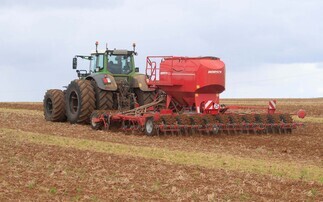
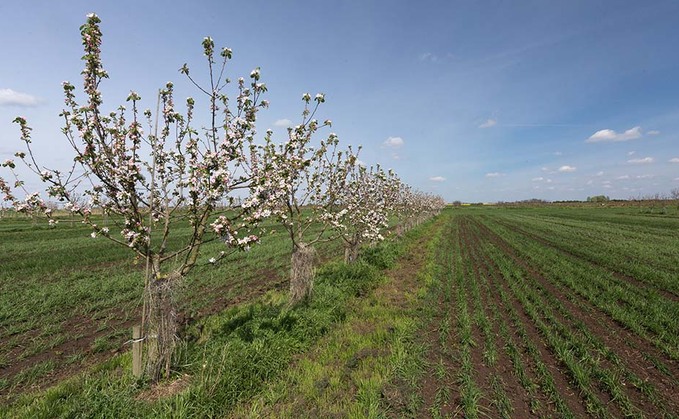
The report draws on new analysis commissioned from Cranfield University and reveals how arable farms adopting silvoarable systems (integrating trees into arable farming) could lock up eight tonnes of CO2 per hectare per year over a 30-year period.
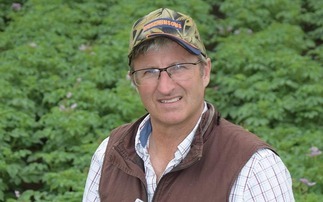
Dr Paul Burgess, Professor of sustainable agriculture and agroforestry at Cranfield University, says: Consumers and retailers want food from farms with zero or negative greenhouse gas emissions and increased tree planting is one of the few ways that farm businesses can maintain food production whilst achieving net zero targets over the next 30 years.
Because the carbon sequestration of newly planted trees is initially slow, planting needs to occur now to achieve targets for 2050.
The analysis shows that the integration of new agroforestry on between 18 and 30 per cent of the farmed area, through incremental planting, can allow UK agriculture to reach net zero by 2050, assuming no change in current per hectare GHG emissions from arable and livestock systems.
The mean emission for UK grassland with livestock is roughly 4t Co2 equivalent/ha/year. Silvopasture (trees planted into grazing systems) can sequester the equivalent of 16t CO2/ha/year over a 40-year period. This would enable the livestock sector to reach net zero by 2050.
Hedges and shelterbelts
An additional 7t Co2/ha can be stored by allowing existing hedges to increase in height from two to three metres.The report outlines the benefit for new hedges and shelterbelts to be a minimum of 11 per cent of arable land in England. This would create the equivalent of 417,000ha of new nature-rich habitat and would add 65 million new trees - estimated to be equivalent to replacing all trees outside woods lost on arable land since 1850.
Rotation
The Woodland Trust is urging the Government to set a target for converting 10 per cent of land suitable for cropping to agroforestry systems as part of a 40-year rotation to meet net zero targets. This would require around 16,000ha to be converted each year, as well as establishing silvopasture on 30 per cent of UK grasslands, requiring about 81,000ha to be converted annually.