Covering vans, pickups, light and heavy goods vehicles, the Commercial Vehicle (CV) Show is designed to cater to the requirements of every sector running and operating load-carrying vehicles from waste handing to supermarket home delivery and tree surgeons. Unsurprisingly, the taxable advantages and governmental policy direction has created a explosion of 100% electric vans and delivery vehicles, with many of the new brands Chinese owned, having recently entered the European market.
READ NOW: Commercially viable Ineos Grenadier?
Skeptical visitors might question the long-term commitment to the UK market by some of these new businesses, alongside some completely unknown听depreciation听and residual values for units once they are three or five years old and outside the manufacturer's warranty or lease plan, but alongside the startup and new entrance businesses, some well-known manufacturers were present with products are technologies more suited to the brand loyalty and longer-term outright ownership more associated with agricultural buyers.
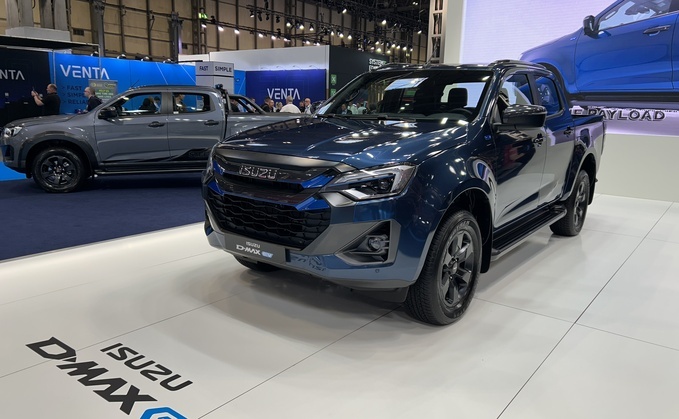
Isuzu D-Max EV
Previewed in the UK for the first time, pickup truck manufacturer Isuzu presented an early production, left-hand drive model of its all-electric D-Max EV. The existence of the vehicle has been no secret, with the brand announcing plans to offer a full-electric pickup in 2023 and production units planned to arrive in late 2025.
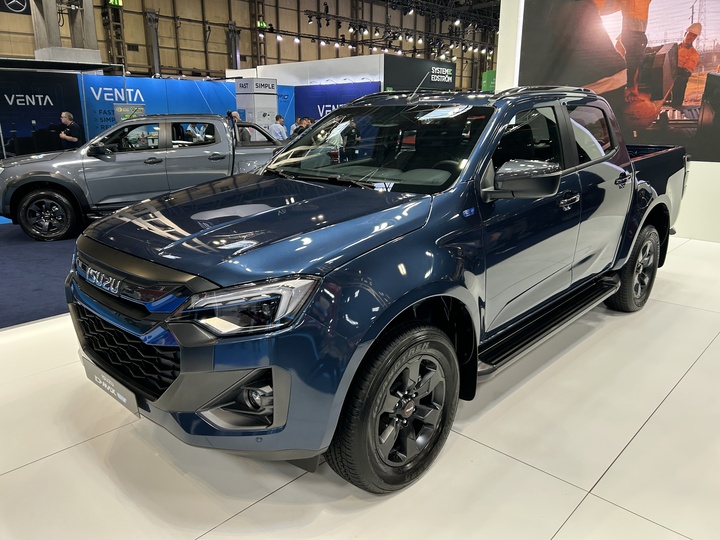
Power is supplied from a 66.9kWh Lithium-ion battery which claims to provide a 263km (163 mile) range. Permanent four-wheel-drive is offered with the drivetrain using a twin-motor layout using a unique E-Axle design with 43kW (58hp) provided to the front and 97kW (130hp) to the rear.
Overall this gives a theoretical maximum power output of 140kW (188hp), however Isuzu has not given any details yet on how the drive will be distributed, and if a range extending, two-wheel drive layout will be selectable for on-road activities.
Overall maximum torque is claimed at 325Nm, divided between 108Nm at the front and 217Nm at the rear. For comparison, the current 1.9-litre diesel D-Max offers a maximum power output of 160hp and 360Nm.
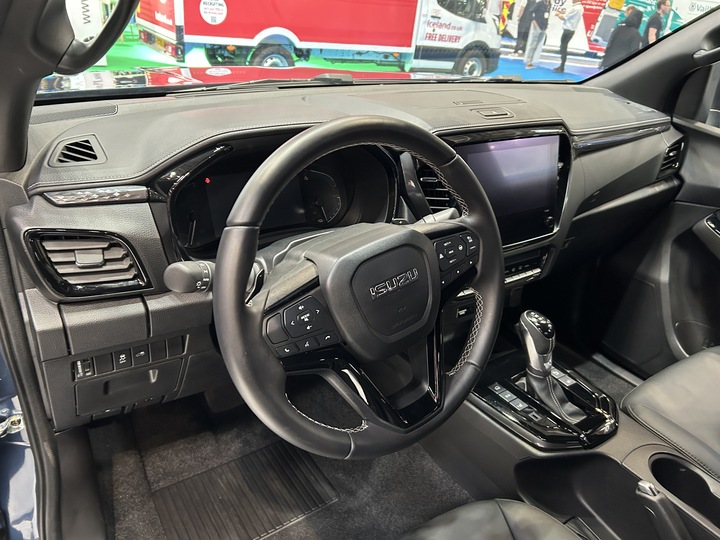
Unlike other all-electric pickups to recently enter the market, Isuzu has kept work-based performances the same with the D-Max EV, providing a 3.5-tonne towing capacity and one-tonne rear bed payload.
READ NOW: First Drive: Isuzu's New D-Max
Two interior trims will be provided which are claimed to align with the increasingly work-focused DL40 and a higher spec option which closer relates to the top-spec V-Cross. Users of the newly facelifted D-Max diesel vehicles will see plenty to match their vehicles, with the interior using the same centre digital display and hybrid digital and analogue dash.
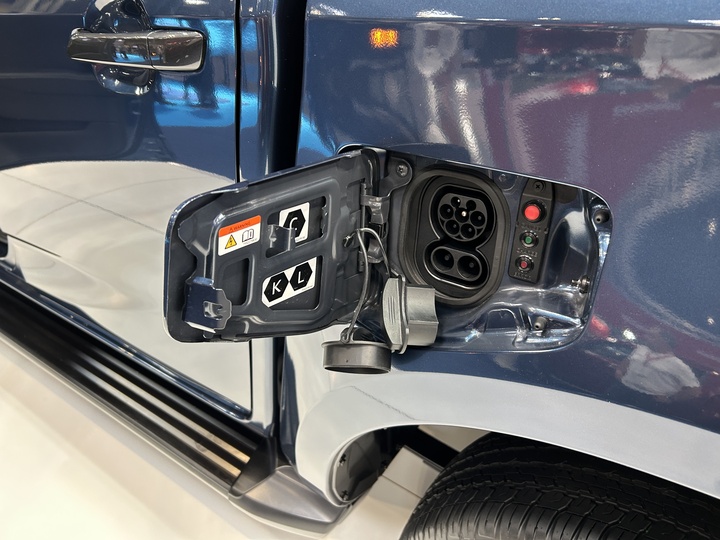
For commercial buyers, the electric variant will also provide some taxable advantages of a 100% first-year capital allowance, and although the double-cab status of the vehicle removes it from the commercial vehicle classification, the 100% electric drive allows different taxable options to the diesel-powered versions. In addition, rural users with green energy electrical generation, such as solar, could recharge the vehicle for a much lower-or zero cost compared to public recharging points.
Pricing for the D-Max EV is yet to be announced.
Ford Ranger Stormtrak Plug-in Hybrid
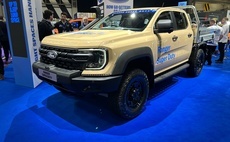
Also presented to the UK market for the first time, the Ford Ranger Stormtrak is the brand's first engine and battery hybrid pickup to be offered in Europe. Moving away from a diesel engine, the Stormtrak uses a 2.3-litre Ecoboost Petrol engine and 75kW battery to provide a combined 281hp and 697Nm of torque. When operating in low-emission zones, the vehicle can run on battery alone with a claimed range of up to 26 miles. Recharging the battery is achieved through power transfer from the engine or through a plug-in connection when parked.
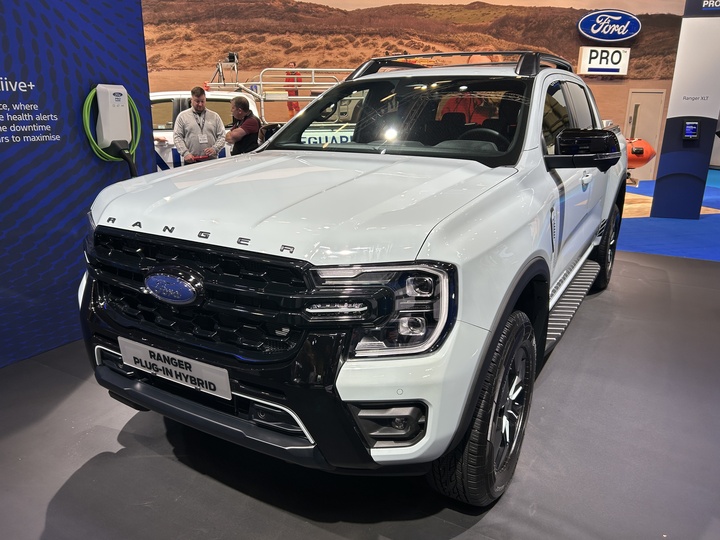
Drive remains four and two-wheel selectable with the extension to choose between all electric, petrol only or a combination of both. The additional on-road models of normal, eco and sport are still offered, alongside towing and various condition-specific off-road modes.
READ NOW: New Toyota Landcruiser review: A refreshing new twist on the old
Capabilities of the hybrid mirror pure-diesel versions with a 3.5-tonne towing capacity and one-tonne gross payload, however the incorporation of a battery has allowed Ford to include some additional functionality over other models. Accessed from the side of the rear bed, the Pro Power Onboard provides two conventional 230v three-pin plugs of with 2.3kW (10A) and 6.9kW (16A) outputs. The smaller output is claimed to be suited to powering most hand tools and recharging batteries, with the larger suited to appliances such as grinders, kettles or air-conditioning units.
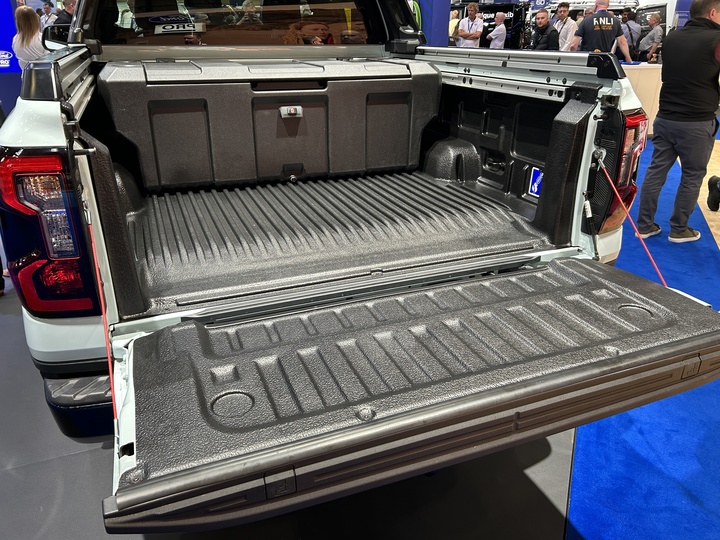
Unlike an all-electric pickup, the Ranger's Plug-in Electric Vehicle (PHEV) status does not offer the same tax advantages of a 100% electric and zero-emission vehicle, and as a double cab is treated as a passenger car not a commercial vehicle, however, users who carry out regular short journeys and have access to green electricity production could find the PHEV status makes the hybrid Ranger a much cheaper pickup to run, with a lower first-year tax than a pure diesel version.听
Offered as a Stormtrak, Wildtrak or XLT variant, prices start from 拢44,900.00 for the Wildtrak, making the unit 拢1,000 cheaper than the equivalent 240hp V6 diesel version.